Secure Power, Swift Connections

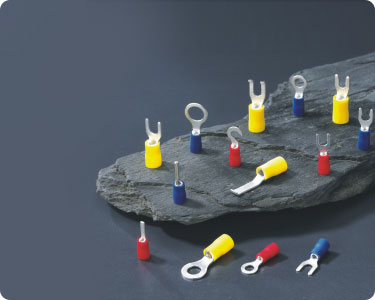
Tinned copper terminals have become an indispensable component in the electrical industry, offering a combination of durability, reliability, and efficiency. This article delves into the world of tinned copper terminals, exploring their composition, benefits, applications, and the factors that make them a preferred choice in various industries.
The Essence of Tinned Copper Terminals
Tinned copper terminals are essentially copper terminals that have been coated with a layer of tin. This process, known as tinning, provides several advantages over bare copper terminals. The tin coating serves as a protective layer against corrosion, enhances conductivity, and improves the terminal's overall lifespan.
Composition and Manufacturing
The core material of tinned copper terminals is, as the name suggests, copper. Copper is chosen for its excellent electrical conductivity and malleability. The terminals are then coated with a thin layer of tin, which is applied through a process called electroplating. This ensures that the tin adheres uniformly to the copper surface, providing a seamless and protective coating.
Benefits of Tinned Copper Terminals
1. Corrosion Resistance: The primary advantage of tinned copper terminals is their resistance to corrosion. The tin coating prevents the copper from oxidizing, which is a common issue with bare copper terminals. This makes tinned copper terminals ideal for use in environments where exposure to moisture or corrosive substances is a concern.
2. Enhanced Conductivity: The tin coating also improves the electrical conductivity of the copper terminal. This is particularly beneficial in applications where efficient power transmission is crucial.
3. Improved Durability: The combination of copper and tin results in a terminal that is more durable than its bare copper counterpart. The tin coating helps to prevent the terminal from wearing down over time, ensuring a longer lifespan.
4. Easy Installation: Tinned copper terminals are designed for easy installation, making them a preferred choice for both professionals and DIY enthusiasts. The smooth surface of the tin coating allows for a secure and reliable connection.
Applications of Tinned Copper Terminals
Tinned copper terminals find extensive applications across various industries, including:
1. Automotive: Tinned copper terminals are widely used in automotive applications, such as wiring harnesses, connectors, and switches. Their corrosion resistance and durability make them ideal for withstanding the harsh conditions of the automotive environment.
2. Industrial: The industrial sector relies on tinned copper terminals for their robustness and reliability. They are used in various industrial applications, such as machinery, electrical panels, and control systems.
3. Marine: Tinned copper terminals are a popular choice for marine applications due to their resistance to corrosion. They are used in boat wiring, connectors, and other marine electrical systems.
4. Residential: Tinned copper terminals are also used in residential settings, such as home wiring, electrical panels, and outdoor lighting fixtures.
Factors Influencing the Choice of Tinned Copper Terminals
When selecting tinned copper terminals, several factors should be considered:
1. Current Rating: The current rating of the terminal should match the requirements of the application. It is essential to choose a terminal with a suitable current rating to ensure safe and efficient operation.
2. Voltage Rating: The voltage rating of the terminal should be compatible with the system's voltage requirements. Using a terminal with an inadequate voltage rating can lead to electrical failures and safety hazards.
3. Environmental Conditions: The terminal's ability to withstand environmental conditions, such as temperature, humidity, and corrosive substances, should be considered when selecting a tinned copper terminal.
4. Installation Requirements: The ease of installation and compatibility with the existing system are crucial factors to consider when choosing tinned copper terminals.
Conclusion
Tinned copper terminals have proven to be a reliable and efficient solution for various electrical applications. Their corrosion resistance, enhanced conductivity, and durability make them a preferred choice in many industries. By considering the factors that influence the choice of tinned copper terminals, one can ensure a safe, efficient, and long-lasting electrical connection.
Welcome to www.ak-elec.com (the "Site"), operated by Zhejiang Aokai Electric Co., Ltd. ("Aokai", "we", "us"). We respect your privacy and are committed to protecting the personal information you share with us. This Privacy & Cookie Policy explains what information we collect, how we use it, and the choices you have.
Information you provide: when you submit an inquiry or contact form, we collect your name, email address, phone number, country, and the content of your message, so that we can respond to your request and provide quotations or technical support.
Information collected automatically: when you browse the Site, we may automatically collect standard technical data such as your IP address, browser type and version, device type, pages visited, and time spent on pages. This data is used in aggregated form only.
The Site uses cookies and similar technologies for the following purposes:
• Essential cookies – required for the Site to function (for example, remembering your language preference or that you have dismissed the cookie notice).
• Analytics/performance cookies – help us understand how visitors use the Site so that we can improve its content and structure. These are only set with your consent.
You can accept or reject non-essential cookies via the cookie banner shown on your first visit. You may also delete or block cookies at any time through your browser settings; please note that disabling essential cookies may affect the functionality of the Site.
We use the information we collect to: respond to inquiries and provide customer support; process quotation and sample requests; improve and optimize the Site; ensure the security of the Site; and comply with legal obligations. We do not sell, rent, or trade your personal information to third parties for their marketing purposes.
We may share your information only with: service providers who help us operate the Site and our business (for example, website hosting and email delivery services), bound by confidentiality obligations; or where required by law, regulation, or legal process.
We take reasonable technical and organizational measures to protect your personal information against unauthorized access, loss, or alteration. Inquiry data submitted through the Site is transmitted to and stored on servers managed for our business use only.
Depending on your location, you may have the right to request access to, correction of, or deletion of your personal information held by us, and to object to or restrict certain processing. To exercise these rights, please contact us using the details below.
The Site may contain links to third-party websites. We are not responsible for the privacy practices or content of those websites, and we encourage you to review their privacy policies.
We may update this Privacy & Cookie Policy from time to time. The current version is always available on this page, and the "Last updated" date below reflects the most recent revision.
If you have any questions about this Privacy & Cookie Policy or our handling of your personal information, please contact us:
Zhejiang Aokai Electric Co., Ltd.
Email: akelectric@ak-elec.com
Phone/WhatsApp: +86 18906871239
Address: Wenzhou, Zhejiang, P.R. China
Last updated: November 12, 2026