Secure Power, Swift Connections

In today's fast-paced technological world, the demand for reliable and efficient electrical systems has never been higher. One crucial component that often goes unnoticed but plays a pivotal role in the performance and longevity of these systems is the heat-resistant terminal. This article delves into the significance of heat-resistant terminals in modern electrical systems, exploring their properties, applications, and benefits.
**Introduction**
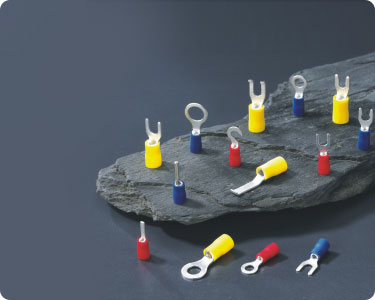
Electrical systems are integral to various industries, from automotive to aerospace, and from residential to commercial settings. These systems rely on a vast array of components, each designed to perform specific functions. Among these components, terminals play a critical role in connecting and transferring electrical currents. Heat-resistant terminals, in particular, are engineered to withstand high temperatures, ensuring the reliability and safety of electrical connections in challenging environments.
**Properties of Heat-Resistant Terminals**
Heat-resistant terminals are designed with materials and coatings that can withstand elevated temperatures without compromising their structural integrity or electrical conductivity. Some of the key properties of these terminals include:
1. High Melting Point: The materials used in heat-resistant terminals have a high melting point, allowing them to maintain their shape and function at temperatures exceeding 200°C.
2. Excellent Thermal Conductivity: These terminals are engineered to dissipate heat effectively, preventing overheating and potential damage to the connected components.
3. Corrosion Resistance: Heat-resistant terminals are often coated with materials like nickel or silver to provide resistance against corrosion, ensuring long-lasting performance in harsh environments.
4. Electrical Conductivity: Despite their ability to withstand high temperatures, heat-resistant terminals maintain excellent electrical conductivity, ensuring efficient power transfer.
**Applications of Heat-Resistant Terminals**
Heat-resistant terminals find applications in various industries and environments where high temperatures are a concern. Some of the common applications include:
1. Automotive Industry: Heat-resistant terminals are widely used in automotive applications, such as in engines, exhaust systems, and under-the-hood electrical components.
2. Aerospace Industry: In aerospace, heat-resistant terminals are crucial in connecting electrical systems in aircraft engines, avionics, and other high-temperature environments.
3. Industrial Equipment: These terminals are used in industrial settings, such as in motors, transformers, and other equipment exposed to high temperatures.
4. Residential and Commercial Buildings: Heat-resistant terminals are also used in residential and commercial buildings, particularly in areas where high temperatures are expected, such as kitchen appliances and lighting fixtures.
**Benefits of Using Heat-Resistant Terminals**
The use of heat-resistant terminals in electrical systems offers several benefits:
1. Enhanced Reliability: By ensuring that electrical connections remain stable and functional in high-temperature environments, heat-resistant terminals contribute to the overall reliability of electrical systems.
2. Extended Lifespan: The ability of these terminals to withstand high temperatures and harsh conditions leads to a longer lifespan for the connected components, reducing maintenance and replacement costs.
3. Improved Safety: Heat-resistant terminals help prevent overheating and potential fires, enhancing the safety of electrical systems in various applications.
4. Cost-Effective: Although heat-resistant terminals may be more expensive than conventional terminals, their long-lasting performance and reduced maintenance costs make them a cost-effective choice in the long run.
**Conclusion**
Heat-resistant terminals are an essential component in modern electrical systems, providing reliable and efficient connections in high-temperature environments. By understanding their properties, applications, and benefits, engineers and designers can ensure the optimal performance and longevity of their electrical systems.
Welcome to www.ak-elec.com (the "Site"), operated by Zhejiang Aokai Electric Co., Ltd. ("Aokai", "we", "us"). We respect your privacy and are committed to protecting the personal information you share with us. This Privacy & Cookie Policy explains what information we collect, how we use it, and the choices you have.
Information you provide: when you submit an inquiry or contact form, we collect your name, email address, phone number, country, and the content of your message, so that we can respond to your request and provide quotations or technical support.
Information collected automatically: when you browse the Site, we may automatically collect standard technical data such as your IP address, browser type and version, device type, pages visited, and time spent on pages. This data is used in aggregated form only.
The Site uses cookies and similar technologies for the following purposes:
• Essential cookies – required for the Site to function (for example, remembering your language preference or that you have dismissed the cookie notice).
• Analytics/performance cookies – help us understand how visitors use the Site so that we can improve its content and structure. These are only set with your consent.
You can accept or reject non-essential cookies via the cookie banner shown on your first visit. You may also delete or block cookies at any time through your browser settings; please note that disabling essential cookies may affect the functionality of the Site.
We use the information we collect to: respond to inquiries and provide customer support; process quotation and sample requests; improve and optimize the Site; ensure the security of the Site; and comply with legal obligations. We do not sell, rent, or trade your personal information to third parties for their marketing purposes.
We may share your information only with: service providers who help us operate the Site and our business (for example, website hosting and email delivery services), bound by confidentiality obligations; or where required by law, regulation, or legal process.
We take reasonable technical and organizational measures to protect your personal information against unauthorized access, loss, or alteration. Inquiry data submitted through the Site is transmitted to and stored on servers managed for our business use only.
Depending on your location, you may have the right to request access to, correction of, or deletion of your personal information held by us, and to object to or restrict certain processing. To exercise these rights, please contact us using the details below.
The Site may contain links to third-party websites. We are not responsible for the privacy practices or content of those websites, and we encourage you to review their privacy policies.
We may update this Privacy & Cookie Policy from time to time. The current version is always available on this page, and the "Last updated" date below reflects the most recent revision.
If you have any questions about this Privacy & Cookie Policy or our handling of your personal information, please contact us:
Zhejiang Aokai Electric Co., Ltd.
Email: akelectric@ak-elec.com
Phone/WhatsApp: +86 18906871239
Address: Wenzhou, Zhejiang, P.R. China
Last updated: November 12, 2026