Secure Power, Swift Connections

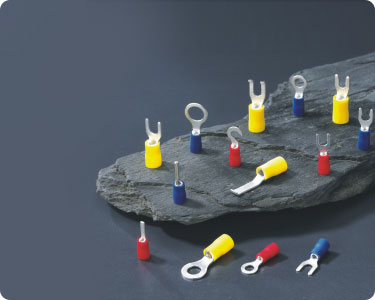
Fork terminals have been an integral part of computing history, playing a crucial role in the development of modern computing systems. This article delves into the evolution of fork terminals, their impact on the industry, and their relevance in today's technological landscape.
The concept of a fork terminal originated in the early days of computing when computers were large, expensive, and primarily used by businesses and research institutions. These terminals were essentially input/output devices that allowed users to interact with a mainframe computer over a network. The term "fork" refers to the physical shape of the terminal's connector, which resembles a fork.
In the 1960s, as computers became more accessible, the need for a more user-friendly interface led to the development of the first generation of fork terminals. These terminals were characterized by their simplicity and ease of use, making it possible for non-technical users to interact with computers. The most notable example of this era was the Teletype Model 33 ASR, which became the standard for many businesses and research institutions.
The 1970s saw the rise of minicomputers, and with them, a new generation of fork terminals. These terminals were more powerful and capable of handling more complex tasks, such as running word processors and spreadsheets. The introduction of the DEC VT100 terminal in 1978 was a significant milestone, as it became the industry standard for many years.
As personal computers (PCs) gained popularity in the 1980s, fork terminals continued to evolve. The PC-based terminals, such as the Wyse 50 and the DEC VT520, were more compact and affordable, making them ideal for home and office use. This era also saw the introduction of graphical user interfaces (GUIs), which revolutionized the way users interacted with computers.
The 1990s marked the decline of fork terminals as a standalone product. The rise of the Internet and the increasing power of PCs led to the development of networked computers and thin clients. These devices could access applications and data stored on a central server, reducing the need for powerful local computing resources.
Despite their decline, fork terminals have not disappeared. They continue to play a role in various industries, such as financial services, healthcare, and manufacturing. In these sectors, fork terminals are used for their reliability, security, and ease of use. Additionally, the emergence of virtualization and cloud computing has brought fork terminals back into the spotlight, as they can be easily deployed and managed in these environments.
Today, the term "fork terminal" is often used interchangeably with "thin client." Thin clients are lightweight devices that rely on a central server for processing power and storage. They are perfect for environments where security and centralized management are critical.
In conclusion, the evolution of fork terminals has been a testament to the ever-changing landscape of computing. From their humble beginnings as simple input/output devices to their current role as thin clients, fork terminals have adapted to the needs of the industry. As technology continues to evolve, it will be interesting to see how fork terminals, or thin clients, will continue to shape the future of computing.
Welcome to www.ak-elec.com (the "Site"), operated by Zhejiang Aokai Electric Co., Ltd. ("Aokai", "we", "us"). We respect your privacy and are committed to protecting the personal information you share with us. This Privacy & Cookie Policy explains what information we collect, how we use it, and the choices you have.
Information you provide: when you submit an inquiry or contact form, we collect your name, email address, phone number, country, and the content of your message, so that we can respond to your request and provide quotations or technical support.
Information collected automatically: when you browse the Site, we may automatically collect standard technical data such as your IP address, browser type and version, device type, pages visited, and time spent on pages. This data is used in aggregated form only.
The Site uses cookies and similar technologies for the following purposes:
• Essential cookies – required for the Site to function (for example, remembering your language preference or that you have dismissed the cookie notice).
• Analytics/performance cookies – help us understand how visitors use the Site so that we can improve its content and structure. These are only set with your consent.
You can accept or reject non-essential cookies via the cookie banner shown on your first visit. You may also delete or block cookies at any time through your browser settings; please note that disabling essential cookies may affect the functionality of the Site.
We use the information we collect to: respond to inquiries and provide customer support; process quotation and sample requests; improve and optimize the Site; ensure the security of the Site; and comply with legal obligations. We do not sell, rent, or trade your personal information to third parties for their marketing purposes.
We may share your information only with: service providers who help us operate the Site and our business (for example, website hosting and email delivery services), bound by confidentiality obligations; or where required by law, regulation, or legal process.
We take reasonable technical and organizational measures to protect your personal information against unauthorized access, loss, or alteration. Inquiry data submitted through the Site is transmitted to and stored on servers managed for our business use only.
Depending on your location, you may have the right to request access to, correction of, or deletion of your personal information held by us, and to object to or restrict certain processing. To exercise these rights, please contact us using the details below.
The Site may contain links to third-party websites. We are not responsible for the privacy practices or content of those websites, and we encourage you to review their privacy policies.
We may update this Privacy & Cookie Policy from time to time. The current version is always available on this page, and the "Last updated" date below reflects the most recent revision.
If you have any questions about this Privacy & Cookie Policy or our handling of your personal information, please contact us:
Zhejiang Aokai Electric Co., Ltd.
Email: akelectric@ak-elec.com
Phone/WhatsApp: +86 18906871239
Address: Wenzhou, Zhejiang, P.R. China
Last updated: November 12, 2026