Secure Power, Swift Connections

Pin Terminals have been a fundamental component in electronic devices and circuits for decades. From simple electronic devices to complex systems, pin terminals play a crucial role in ensuring efficient and reliable connectivity. This article delves into the world of pin terminals, exploring their history, types, applications, and future trends.
### Introduction
Pin terminals, often referred to as pins, are a type of electrical connector used to establish connections between circuits and components. They come in various shapes, sizes, and materials, each designed to meet specific application requirements. The history of pin terminals dates back to the early days of electronics, and they have since evolved to become an integral part of modern electronic devices.
### History
The concept of pin terminals originated in the late 19th century, when electrical devices began to gain popularity. Early versions of pin terminals were simple and made of copper, providing a basic means of connecting wires and circuits. Over time, advancements in materials and manufacturing techniques led to the development of more sophisticated pin terminals.
### Types of Pin Terminals
There are several types of pin terminals, each with its own unique characteristics:
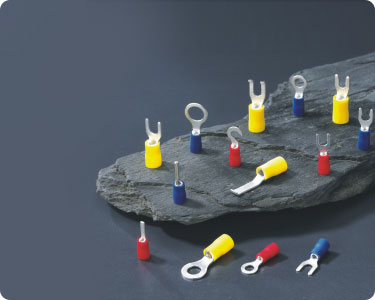
1. **Solderless Pin Terminals**: These terminals are designed for quick and easy installation without the need for soldering. They are commonly used in prototyping and repair work. 2. **Solderable Pin Terminals**: These terminals require soldering to establish a secure connection. They are suitable for applications where durability and long-term reliability are critical. 3. **Insulated Pin Terminals**: These terminals feature an insulating layer that protects the wire and ensures safe operation. They are commonly used in high-voltage applications. 4. **Spade terminals**: These terminals have a forked end that fits into a connector or a terminal block. They are widely used in automotive, marine, and industrial applications.
### Applications
Pin terminals find extensive use in various applications across different industries:
1. **Automotive Industry**: Pin terminals are extensively used in vehicles for connecting sensors, switches, and other electronic components. 2. **Telecommunications**: These terminals are used in telecommunication devices to establish connections between various components. 3. **Industrial Automation**: Pin terminals are an essential component in industrial automation systems, ensuring reliable connections between sensors, actuators, and control panels. 4. **Consumer Electronics**: From smartphones to computers, pin terminals play a vital role in ensuring connectivity within electronic devices.
### Future Trends
The demand for pin terminals is expected to grow in the coming years due to the increasing demand for electronic devices and the advancements in technology. Some of the key trends that are likely to shape the future of pin terminals include:
1. **Miniaturization**: As electronic devices become smaller, the need for miniaturized pin terminals will increase. 2. **Higher Durability**: Pin terminals designed to withstand harsh environments and extreme temperatures will gain popularity. 3. **Advanced Materials**: The use of advanced materials like high-tech plastics and metals will improve the performance and lifespan of pin terminals.
### Conclusion
Pin terminals have come a long way since their inception and continue to be a crucial component in modern electronics. Understanding their types, applications, and future trends can help engineers and hobbyists make informed decisions when designing and building electronic devices.
Welcome to www.ak-elec.com (the "Site"), operated by Zhejiang Aokai Electric Co., Ltd. ("Aokai", "we", "us"). We respect your privacy and are committed to protecting the personal information you share with us. This Privacy & Cookie Policy explains what information we collect, how we use it, and the choices you have.
Information you provide: when you submit an inquiry or contact form, we collect your name, email address, phone number, country, and the content of your message, so that we can respond to your request and provide quotations or technical support.
Information collected automatically: when you browse the Site, we may automatically collect standard technical data such as your IP address, browser type and version, device type, pages visited, and time spent on pages. This data is used in aggregated form only.
The Site uses cookies and similar technologies for the following purposes:
• Essential cookies – required for the Site to function (for example, remembering your language preference or that you have dismissed the cookie notice).
• Analytics/performance cookies – help us understand how visitors use the Site so that we can improve its content and structure. These are only set with your consent.
You can accept or reject non-essential cookies via the cookie banner shown on your first visit. You may also delete or block cookies at any time through your browser settings; please note that disabling essential cookies may affect the functionality of the Site.
We use the information we collect to: respond to inquiries and provide customer support; process quotation and sample requests; improve and optimize the Site; ensure the security of the Site; and comply with legal obligations. We do not sell, rent, or trade your personal information to third parties for their marketing purposes.
We may share your information only with: service providers who help us operate the Site and our business (for example, website hosting and email delivery services), bound by confidentiality obligations; or where required by law, regulation, or legal process.
We take reasonable technical and organizational measures to protect your personal information against unauthorized access, loss, or alteration. Inquiry data submitted through the Site is transmitted to and stored on servers managed for our business use only.
Depending on your location, you may have the right to request access to, correction of, or deletion of your personal information held by us, and to object to or restrict certain processing. To exercise these rights, please contact us using the details below.
The Site may contain links to third-party websites. We are not responsible for the privacy practices or content of those websites, and we encourage you to review their privacy policies.
We may update this Privacy & Cookie Policy from time to time. The current version is always available on this page, and the "Last updated" date below reflects the most recent revision.
If you have any questions about this Privacy & Cookie Policy or our handling of your personal information, please contact us:
Zhejiang Aokai Electric Co., Ltd.
Email: akelectric@ak-elec.com
Phone/WhatsApp: +86 18906871239
Address: Wenzhou, Zhejiang, P.R. China
Last updated: November 12, 2026