Secure Power, Swift Connections

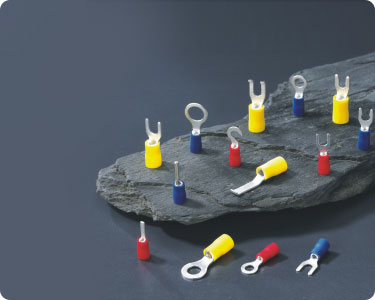
Fork terminals have been an integral part of computing history, serving as a bridge between the early days of computing and the sophisticated systems we use today. This article delves into the evolution of fork terminals, their impact on modern computing, and the legacy they leave behind.
The concept of a fork terminal originated in the 1960s, a time when computers were massive, expensive, and primarily used by large organizations. These terminals were designed to connect users to mainframe computers, allowing them to access and process data remotely. The term "fork" refers to the shape of the terminal's cursor control, which resembles a fork.
One of the earliest examples of a fork terminal is the Teletype Model 33 ASR, which was introduced by Teletype Corporation in 1963. This terminal featured a mechanical typewriter keyboard and a printer, making it one of the first devices to provide a direct connection between a user and a computer.
As technology advanced, so did the capabilities of fork terminals. The introduction of the ASCII standard in 1963 allowed for the universal encoding of text, making it easier to transfer data between different systems. This standardization played a crucial role in the development of fork terminals, as it enabled them to communicate with a wide range of computers.
The 1970s saw the rise of minicomputers, which were smaller and more affordable than mainframes. This shift in computing power led to the development of more advanced fork terminals, such as the DEC VT100, which introduced features like cursor movement keys and a brighter display. These terminals became popular among businesses and academic institutions, as they provided a cost-effective way to access computing resources.
One of the most significant advancements in fork terminal technology came with the introduction of the graphical user interface (GUI) in the 1980s. While GUIs revolutionized the way users interacted with computers, they also posed a challenge for fork terminals. Many users preferred the simplicity and efficiency of text-based interfaces, and fork terminals continued to be used alongside GUIs.
In the 1990s, the rise of personal computers (PCs) further diminished the popularity of fork terminals. PCs offered users a more intuitive and powerful way to interact with computers, and the need for remote access to mainframes decreased. However, fork terminals did not disappear entirely. They continued to be used in industries such as finance, healthcare, and telecommunications, where secure and reliable access to data was crucial.
Today, fork terminals are considered a relic of the past, but their impact on modern computing cannot be overstated. They were instrumental in the development of remote computing, which has become an essential part of our lives. Fork terminals also paved the way for the modern terminal emulators we use today, which allow us to access and manage remote systems from our PCs and mobile devices.
The legacy of fork terminals is evident in the design of modern computing devices. The concept of a terminal, which provides a text-based interface for interacting with a computer, remains a fundamental aspect of computing. Moreover, the emphasis on secure and reliable access to data, which was a hallmark of fork terminals, continues to be a priority in today's computing landscape.
In conclusion, fork terminals played a significant role in the evolution of computing. They were a critical component in the transition from mainframe computers to the distributed computing systems we use today. While they may no longer be the centerpiece of modern computing, the impact of fork terminals is still felt in the way we interact with computers and the technologies that have emerged as a result of their innovation.
Welcome to www.ak-elec.com (the "Site"), operated by Zhejiang Aokai Electric Co., Ltd. ("Aokai", "we", "us"). We respect your privacy and are committed to protecting the personal information you share with us. This Privacy & Cookie Policy explains what information we collect, how we use it, and the choices you have.
Information you provide: when you submit an inquiry or contact form, we collect your name, email address, phone number, country, and the content of your message, so that we can respond to your request and provide quotations or technical support.
Information collected automatically: when you browse the Site, we may automatically collect standard technical data such as your IP address, browser type and version, device type, pages visited, and time spent on pages. This data is used in aggregated form only.
The Site uses cookies and similar technologies for the following purposes:
• Essential cookies – required for the Site to function (for example, remembering your language preference or that you have dismissed the cookie notice).
• Analytics/performance cookies – help us understand how visitors use the Site so that we can improve its content and structure. These are only set with your consent.
You can accept or reject non-essential cookies via the cookie banner shown on your first visit. You may also delete or block cookies at any time through your browser settings; please note that disabling essential cookies may affect the functionality of the Site.
We use the information we collect to: respond to inquiries and provide customer support; process quotation and sample requests; improve and optimize the Site; ensure the security of the Site; and comply with legal obligations. We do not sell, rent, or trade your personal information to third parties for their marketing purposes.
We may share your information only with: service providers who help us operate the Site and our business (for example, website hosting and email delivery services), bound by confidentiality obligations; or where required by law, regulation, or legal process.
We take reasonable technical and organizational measures to protect your personal information against unauthorized access, loss, or alteration. Inquiry data submitted through the Site is transmitted to and stored on servers managed for our business use only.
Depending on your location, you may have the right to request access to, correction of, or deletion of your personal information held by us, and to object to or restrict certain processing. To exercise these rights, please contact us using the details below.
The Site may contain links to third-party websites. We are not responsible for the privacy practices or content of those websites, and we encourage you to review their privacy policies.
We may update this Privacy & Cookie Policy from time to time. The current version is always available on this page, and the "Last updated" date below reflects the most recent revision.
If you have any questions about this Privacy & Cookie Policy or our handling of your personal information, please contact us:
Zhejiang Aokai Electric Co., Ltd.
Email: akelectric@ak-elec.com
Phone/WhatsApp: +86 18906871239
Address: Wenzhou, Zhejiang, P.R. China
Last updated: November 12, 2026