Secure Power, Swift Connections

In the realm of electrical connections, copper crimp terminals play a pivotal role. These small yet mighty components are essential for ensuring secure and reliable connections in various applications. This article delves into the intricacies of copper crimp terminals, exploring their types, uses, and the art of proper installation.
Copper crimp terminals are designed to connect wires to electrical devices, such as switches, outlets, and circuit breakers. They are made from high-quality copper, which is known for its excellent conductivity and durability. The process of crimping involves compressing the terminal around the wire, creating a mechanical and electrical connection. This method is preferred over soldering due to its simplicity, speed, and reliability.
There are several types of copper crimp terminals, each designed for specific applications. The most common types include:
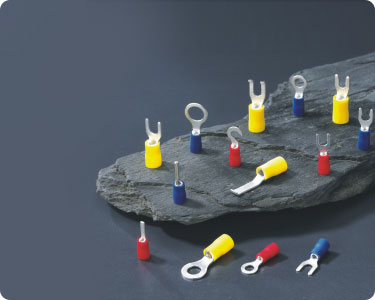
1. Spade terminals: These are used to connect wires to screw terminals on devices such as switches and outlets. They feature a pointed tip that easily pierces through insulation and a flat, wide body that provides a secure grip on the wire.
2. Ring terminals: These terminals are used to connect wires to busbars, terminals blocks, and other devices with a threaded hole. They have a circular shape with a pointed tip and a crimping area that fits around the wire.
3. Push-on terminals: Also known as quick-connect terminals, these are designed for quick and easy installation. They feature a housing with a spring-loaded mechanism that securely holds the wire in place without the need for crimping tools.
4. Insulated terminals: These terminals have a plastic insulation sleeve that covers the wire and terminal, providing additional protection against short circuits and electrical hazards.
The proper installation of copper crimp terminals is crucial for ensuring a reliable connection. Here are some key steps to follow:
1. Choose the right terminal: Select a terminal that matches the wire size and application. The terminal should have a crimping area that is slightly larger than the wire diameter to ensure a secure connection.
2. Strip the wire: Strip the insulation from the wire end, leaving enough exposed conductor for the terminal to grip. The length of the exposed wire should be equal to or slightly longer than the terminal's crimping area.
3. Insert the wire: Place the wire into the terminal, ensuring that the exposed conductor is fully seated in the crimping area. For spade terminals, the wire should be inserted with the insulation facing away from the terminal.
4. Crimp the terminal: Use a crimping tool to compress the terminal around the wire. The tool should apply even pressure to ensure a consistent and secure connection. For push-on terminals, simply push the wire into the housing until it clicks into place.
5. Inspect the connection: Once the terminal is crimped, inspect the connection to ensure that the wire is securely held in place and that there are no gaps or loose connections.
Copper crimp terminals are widely used in various industries, including automotive, aerospace, and telecommunications. They are essential for ensuring reliable electrical connections in harsh environments, where traditional methods like soldering may not be suitable.
In conclusion, copper crimp terminals are a vital component in the world of electrical connections. Understanding their types, uses, and proper installation techniques is crucial for ensuring secure and reliable connections in various applications. By mastering the art of copper crimp terminals, you can confidently tackle any electrical project with confidence.
Welcome to www.ak-elec.com (the "Site"), operated by Zhejiang Aokai Electric Co., Ltd. ("Aokai", "we", "us"). We respect your privacy and are committed to protecting the personal information you share with us. This Privacy & Cookie Policy explains what information we collect, how we use it, and the choices you have.
Information you provide: when you submit an inquiry or contact form, we collect your name, email address, phone number, country, and the content of your message, so that we can respond to your request and provide quotations or technical support.
Information collected automatically: when you browse the Site, we may automatically collect standard technical data such as your IP address, browser type and version, device type, pages visited, and time spent on pages. This data is used in aggregated form only.
The Site uses cookies and similar technologies for the following purposes:
• Essential cookies – required for the Site to function (for example, remembering your language preference or that you have dismissed the cookie notice).
• Analytics/performance cookies – help us understand how visitors use the Site so that we can improve its content and structure. These are only set with your consent.
You can accept or reject non-essential cookies via the cookie banner shown on your first visit. You may also delete or block cookies at any time through your browser settings; please note that disabling essential cookies may affect the functionality of the Site.
We use the information we collect to: respond to inquiries and provide customer support; process quotation and sample requests; improve and optimize the Site; ensure the security of the Site; and comply with legal obligations. We do not sell, rent, or trade your personal information to third parties for their marketing purposes.
We may share your information only with: service providers who help us operate the Site and our business (for example, website hosting and email delivery services), bound by confidentiality obligations; or where required by law, regulation, or legal process.
We take reasonable technical and organizational measures to protect your personal information against unauthorized access, loss, or alteration. Inquiry data submitted through the Site is transmitted to and stored on servers managed for our business use only.
Depending on your location, you may have the right to request access to, correction of, or deletion of your personal information held by us, and to object to or restrict certain processing. To exercise these rights, please contact us using the details below.
The Site may contain links to third-party websites. We are not responsible for the privacy practices or content of those websites, and we encourage you to review their privacy policies.
We may update this Privacy & Cookie Policy from time to time. The current version is always available on this page, and the "Last updated" date below reflects the most recent revision.
If you have any questions about this Privacy & Cookie Policy or our handling of your personal information, please contact us:
Zhejiang Aokai Electric Co., Ltd.
Email: akelectric@ak-elec.com
Phone/WhatsApp: +86 18906871239
Address: Wenzhou, Zhejiang, P.R. China
Last updated: November 12, 2026